

7 Benefits of Lab-Grown Healing Stones for Your Practice
Quick Summary
Lab grown healing stones are real crystals grown in controlled settings, chemically identical to mined stones, and used mainly as focus tools for meditation and mindful routines. They offer more predictable pricing and clearer sourcing, though they have no proven medical healing effect and should complement, never replace, professional care.
- Lab-grown quartz, amethyst and citrine share the same crystal structure and Mohs hardness as mined versions.
- Lab production uses substantial energy, so environmental impact depends on the grower's power source.
- No crystal has been shown in controlled research to treat, cure or prevent any disease.
- Do not ingest stones or stone powders, and keep small stones away from children and pets.
- A selenite wand or clear quartz point makes a simple, low-cost first purchase for beginners.
Table of Contents
- What Lab-Grown Healing Stones Are and How They Are Made
- Lab-Grown vs. Natural Gemstones: Chemical, Physical, and Optical Similarities
- Ethical Sourcing, Environmental Impact, and Supply-Chain Transparency
- Healing Properties of Lab-Grown Crystals: Belief, Evidence, and Limits
- How to Identify Lab-Grown Gemstones and What to Look for on a Label
- Pricing, Value, and Stone-by-Stone Uses in Wellness Rituals
- Choosing Your First Lab-Grown Healing Stones at Liv Rocks
- Frequently Asked Questions
What Lab-Grown Healing Stones Are and How They Are Made
Lab grown healing stones are crystals that are cultivated in a controlled setting rather than extracted from the earth. The stone you hold is chemically the same mineral as its mined counterpart. What differs is where it came from and how long it took to form. Most lab-grown quartz, amethyst and citrine are produced through hydrothermal growth, where a seed crystal is suspended in a pressurized vessel filled with mineral-rich solution and grown over weeks or months (An Introduction to Synthetic Gem Materials). Gemological Institute of America's lab-grown gemstone overview
Other stones, including many forms of carbon-based gems, are grown using high-pressure, high-temperature methods that recreate the conditions deep underground. For the buyer, the practical point is simple: a lab-grown stone is a real crystal, not a glass imitation, and its physical makeup can be verified with standard gemological testing.
Lab-Grown vs. Natural Gemstones: Chemical, Physical, and Optical Similarities
Lab-grown and natural stones share the same crystal structure, hardness and refractive properties because they are the same mineral. A lab-grown amethyst is still quartz, with the same Mohs hardness as a mined one. The differences show up in inclusions, growth patterns and color uniformity. Natural stones often carry irregular inclusions formed over geological time, while lab-grown stones tend to have more consistent color and fewer large flaws.
Expect differences in price and in the variety of rare colors, not in how the stone feels or performs as a physical object.
Ethical Sourcing, Environmental Impact, and Supply-Chain Transparency
Many shoppers choose lab grown healing stones because they avoid the land disturbance and labor concerns linked to some mining operations. That reasoning is reasonable, but it is not automatic. Lab production uses substantial energy, and the environmental footprint depends on the power source used by the grower. Federal Trade Commission guidance on gemstone and jewelry marketing claims
When you buy from any seller, ask where stones were grown or mined, whether the seller can document that origin, and how the stone was handled before it reached you. A transparent seller will answer those questions directly.
Healing Properties of Lab-Grown Crystals: Belief, Evidence, and Limits
This is the question the keyword is really asking, so it deserves a direct answer: whether a lab-grown stone has healing properties depends entirely on what you mean by healing. As a matter of established material science, no crystal, lab-grown or mined, has been shown in controlled research to treat, cure or prevent any disease. and the Food and Drug Administration does not recognize stones as drugs or medical devices. A lab-grown amethyst is quartz; a lab-grown citrine is quartz with color; neither carries a mechanism by which it could alter a diagnosed condition.
As a matter of spiritual and cultural tradition, the picture is different. Crystal use as a focus for intention, meditation and ritual has a long history across many cultures, and practitioners report that handling a stone during meditation helps them slow down, breathe deliberately and stay with a single thought. That is a real, reportable experience, it is just not the same claim as 'this stone cures anxiety.' The honest framing is that stones can support a mindfulness routine, and a mindfulness routine can support wellbeing, but the stone is not the active medical ingredient.
Watch out: any seller who tells you a stone can replace medication, treat a diagnosed condition, or be ingested for internal healing is making a claim that goes beyond both the evidence and what regulators permit. Keep professional medical care in place for any health concern, and treat stones as a complement to care, never a substitute. For everyday practical ideas, see a guide to using crystals for peace and focus.
How Growth Methods May Shape Metaphysical Interpretations
A common objection is that a stone grown in a lab over weeks cannot carry the same 'earth energy' as one formed over millennia. Practitioners split on this. Some argue that the energetic history of a stone is tied to its geological origin and that a lab-grown stone is therefore spiritually different, even if chemically identical. Others argue that what matters is the mineral itself, its crystal structure, color and the intention the user brings, and that origin is irrelevant to practice. A third, increasingly common view treats the question as unanswerable by current methods and simply chooses based on other factors: price, clarity, sourcing transparency and personal resonance.
What can be said with confidence is that the verifiable material properties are the same. A lab-grown clear quartz point has the same crystal structure and Mohs hardness as a mined one, and standard gemological testing can confirm the material. What differs is the narrative attached to it. If origin matters to your practice, let that guide your choice; if it does not, a lab-grown stone offers the same ritual role at a more predictable price and with a clearer supply chain.
Practical, Non-Medical Ways to Use Stones in Wellness Rituals
Most practitioners use stones in ways that are safe and easy to describe: holding a stone during meditation, placing one on a desk as a visual cue for a intention, carrying a small tumble in a pocket as a reminder, or arranging a few pieces on a tray as part of a morning routine. These are mindfulness and intention-setting practices, and they work the way any ritual works, by giving attention a place to land.
A few cautions are worth stating plainly. Do not ingest stones or stone powders, and do not add them to food or drink. Keep small stones away from children and pets, since choking and swallowing are real risks. And if you are using stones as part of a wellness routine, tell your healthcare provider what you are doing so it can be considered alongside your actual care.
How to Identify Lab-Grown Gemstones and What to Look for on a Label
Start with the seller's description. A trustworthy listing names the stone, states whether it is lab-grown, and describes its origin clearly. Look for terms such as "lab-grown," "lab-created" or "created." Vague wording like "crystal" alone with no origin is a signal to ask questions.
Check for gemological reports when they are offered, and for stated treatments such as dyeing or coating. Those signs help but do not replace professional testing for high-value purchases.
Pricing, Value, and Stone-by-Stone Uses in Wellness Rituals
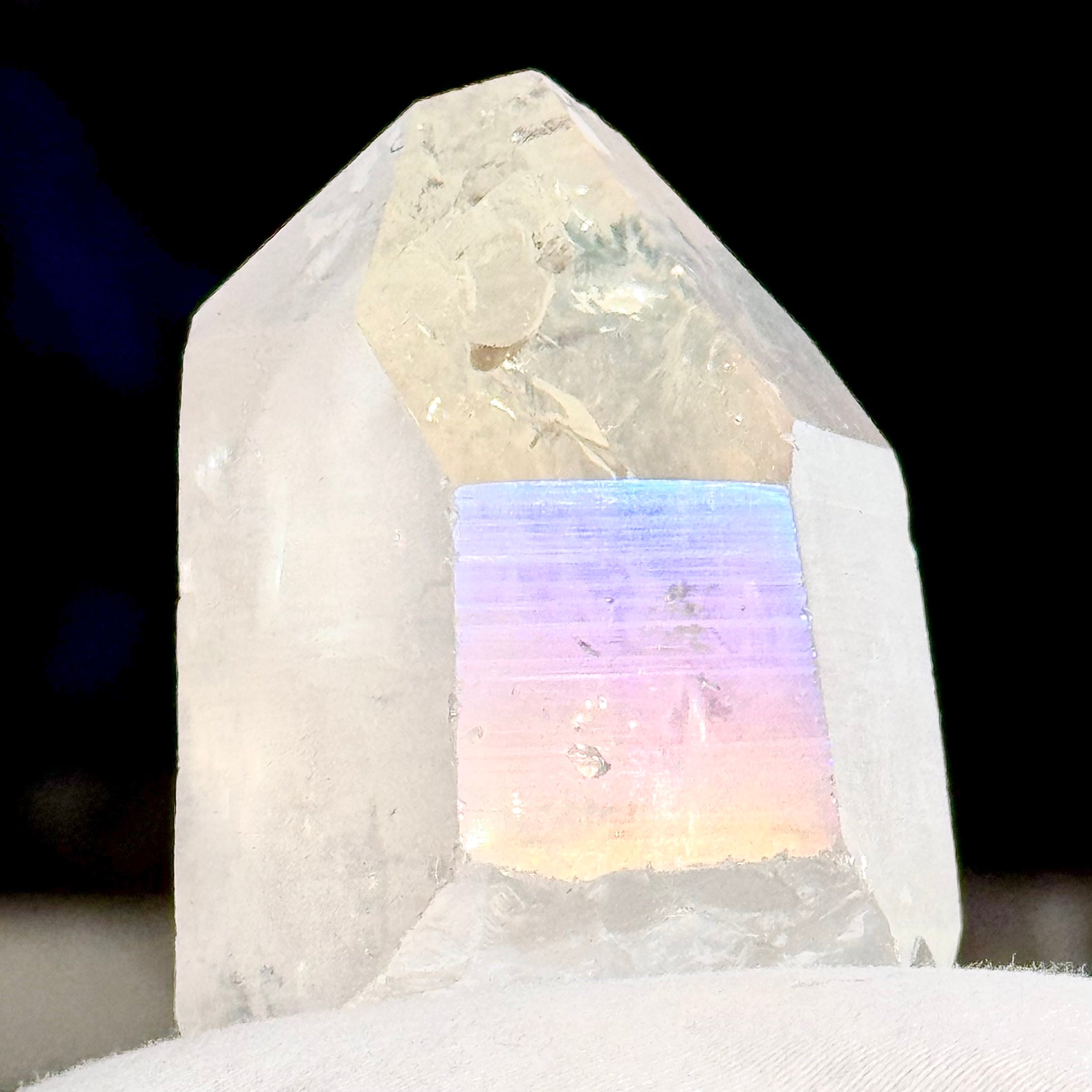
At Liv Rocks, the Selenite Cleansing Crystal is $4.50, the Large Clear Quartz Points are $3.00, the Chakra Healing Stones Set is $19.95, and the Angel Aura Semi-Polished Quartz Points are $25.00. To understand what drives these prices, read why ethically sourced crystals cost more. The value case is straightforward: you are paying for the mineral and the cut, not for rarity created by geological scarcity, so a beginner can assemble a small practice set without a large outlay.
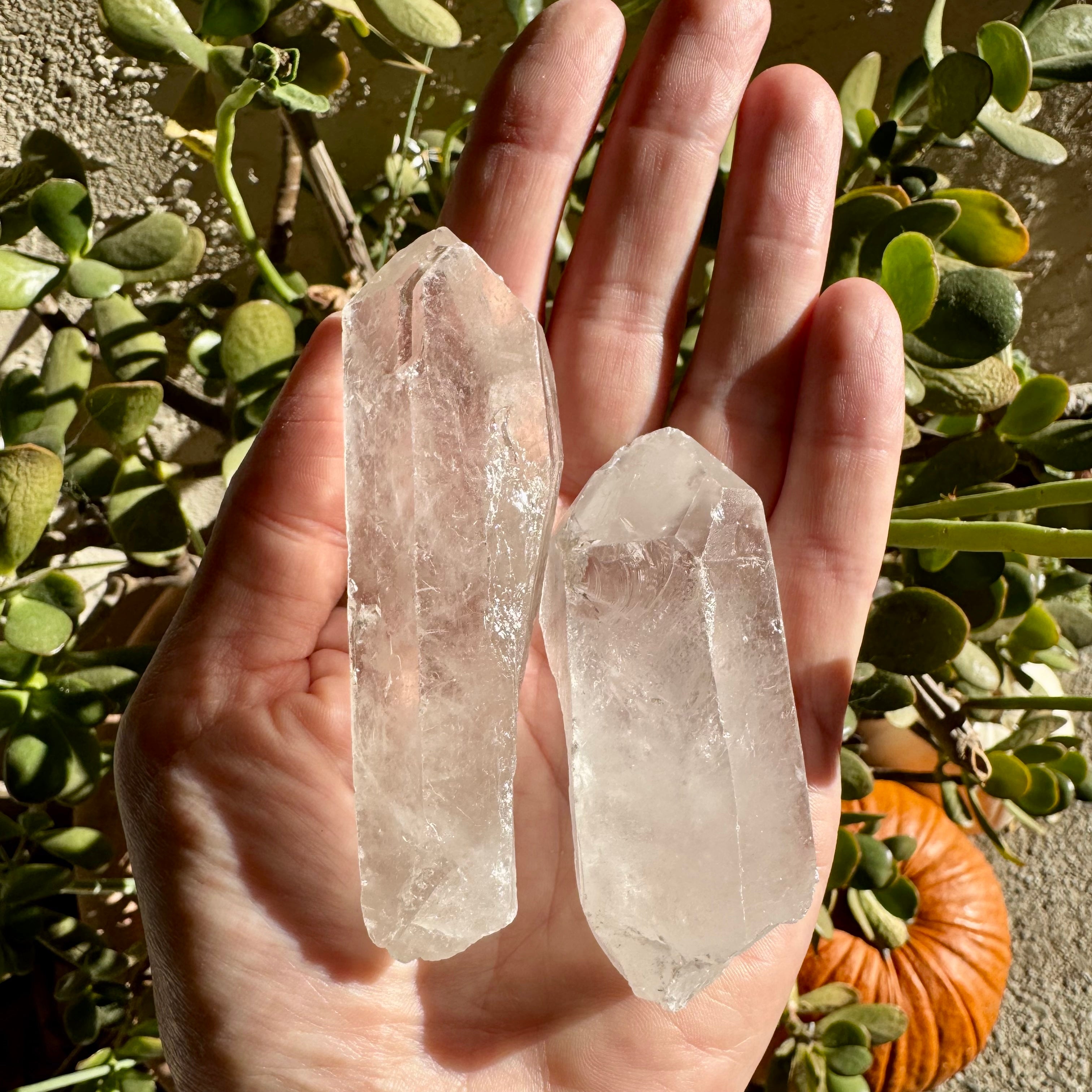
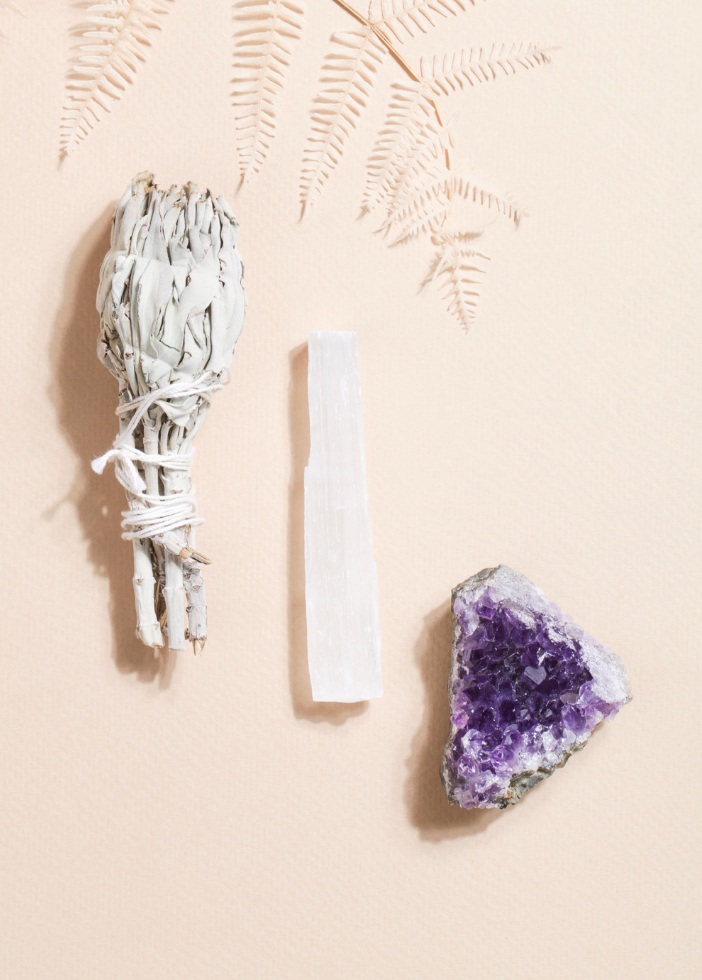
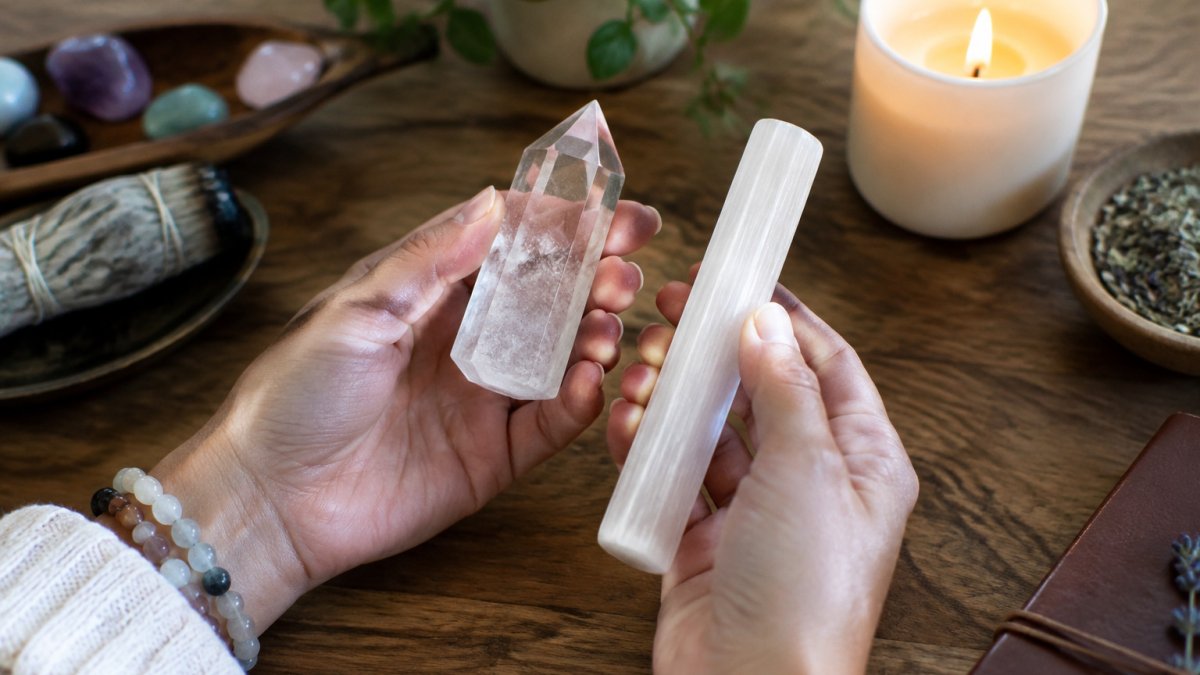
Stone-by-stone, the traditional associations are consistent enough to be useful as a starting map. The table below pairs the most commonly searched stones with their traditional associations, notes whether a lab-grown version is commonly available, and gives one practical, non-medical way people use each. These are cultural and spiritual associations, not medical claims.
| Stone | Traditional association | Lab-grown commonly available? | Practical ritual use |
|---|---|---|---|
| Clear quartz | Clarity, focus, amplifying other stones | Yes, hydrothermal quartz is widely produced | Hold during meditation or place on a desk as a focus cue |
| Amethyst | Calm, wind-down, evening routine | Yes, lab-grown quartz with amethyst color is available | Keep on a nightstand as a cue for an evening wind-down |
| Citrine | Motivation, morning energy | Yes, lab-grown quartz with citrine color is available | Carry a small piece as a morning intention reminder |
| Rose quartz | Gentleness, self-compassion | Yes, lab-grown pink quartz is available | Place near a mirror or journal as a self-care cue |
| Selenite | Clearing, resetting a space | Sweep a wand over a space as a reset ritual | |
| Black tourmaline | Grounding, boundaries | Rare in lab-grown form; usually natural | Keep near a workspace as a boundary reminder |
| Angel aura quartz | Uplift, display | Use as a display piece or focal point on a tray |
A few practical notes make the guide more useful. For any stone you plan to wear, ask the seller whether it has been dyed or coated, since those treatments can affect both care and skin contact.
Liv Rocks stone prices
Choosing Your First Lab-Grown Healing Stones at Liv Rocks
If you are new to crystals, start small. A selenite wand is a simple first purchase for energy cleansing, and a clear quartz point can be used for focus and intention. For a complete starting point, the Chakra Healing Stones Set gives you seven stones in one carry bag, each tied to a specific chakra. Once you have a feel for your practice, add pieces such as the Angel Aura Semi-Polished Quartz Points for a standout display piece.
Liv Rocks has nearly a decade of experience hand-selecting ethically sourced stones, and we are happy to help you choose the right starting pieces for your goals.
Frequently Asked Questions
Are lab-created stones worth it?
Lab-created stones can be worth it if your priorities are consistent appearance, lower cost, and a clear sourcing story. They are chemically and physically similar to natural stones, so they look and feel the same in hand. Their value for healing practice depends on your own intention and belief, since the evidence that any stone produces physical healing effects is limited. Compare the price and the seller's disclosure before buying, and choose the stone whose color and use fit your practice.
Do lab-grown gemstones have the same healing properties as natural stones?
Healing properties are a matter of belief and tradition, not something that can be measured in a lab. Practitioners often assign the same meanings to lab-grown and natural versions of a stone, but no verified research shows that either form produces physical healing. Growth method does not change the traditional symbolism, though some practitioners argue that natural formation carries a different story. Treat stones as a tool for focus and ritual rather than a medical treatment.
Are lab-grown healing stones more ethical than natural stones?
Lab-grown stones avoid many mining concerns, such as land disturbance and some labor issues, but they are not automatically impact-free. Lab production is energy intensive, so the environmental footprint depends on the energy source used. Ethical claims are only as strong as the seller's supply-chain transparency. Look for a brand that explains how its stones are made and sourced rather than relying on the word ethical alone.
How can you tell whether a gemstone is lab-grown or natural?
Identification usually requires gemological testing, since lab-grown and natural stones share the same chemical composition. Ask the seller for a written description of how the stone was produced and whether it has a grading or origin report. Lab-grown stones are sometimes identified by growth patterns or inclusions visible under magnification. When a seller discloses clearly and does not hide the origin, that is a stronger sign of trust than any visual check.
