

7 Spots to Place Crystals in Your Living Room
Last Updated: November 21, 2026
Quick Summary
Crystal placement in your living room starts with mapping four zones: entry, gathering, rest, and transition. Match one intention per zone, such as protection at the entry or calm in the rest corner, and place stones at eye level or just below it so they stay visible and part of daily use.
- In feng shui, the wealth corner is the far left corner of the room from the main door.
- Keep entryway stones off the floor on a console roughly 30 to 36 inches high.
- Place one stone per intention per zone and rotate stones that serve the same purpose.
- Amethyst and rose quartz are commonly cited as stones that can fade in direct sunlight.
- Keep selenite away from water and humidifiers because it is sensitive to moisture.
Table of Contents
- Start With the Room's Purpose Before You Place a Single Stone
- Feng Shui Crystal Placement in the Living Room
- The Best Crystals for Living Room Spaces
- Which Crystals Should Not Be Placed Together
- How to Activate Crystals for the First Time
- Where Crystals Belong on Shelves, Tables, and Windowsills
- Keeping Crystals Safe and Cared For Around Kids, Pets, and Sunlight
- Build Your Living Room Crystal Set With Liv Rocks
- Frequently Asked Questions
Start With the Room's Purpose Before You Place a Single Stone
Crystal placement works best when it starts with a question: what do you want this room to feel like?
Before you set a single stone on a shelf, walk the room. Where do you sit? Where does light land?
Below, we'll show you exactly how to map your space, match stones to spots, and keep everything safe and cared for.
Map Your Living Room's Zones
Divide the room into four working zones:
- Entry zone: the path from the door into the room
- Gathering zone: seating, coffee table, conversation area
- Rest zone: the quiet corner, reading chair, or window seat
Each zone carries a different feel. The entry is about protection. The gathering area is about harmony. The rest corner is about calm.
Match Each Zone to an Intention
Intention is the quality you want a stone to support, such as calm, protection, or abundance. A common approach is to pick one intention per zone so the room doesn't feel scattered.
Write it down before you shop. "Entry: protection. Coffee table: harmony. Window seat: calm." That short list keeps your crystal placement focused.
Feng Shui Crystal Placement in the Living Room
Feng shui crystal placement in the living room centers on two spots: the wealth corner and the entryway. In feng shui practice, the wealth corner is traditionally described as the far left corner of the room from the main door.
The entryway matters just as much. It's the first energy a guest meets, so it sets the tone for the whole home.
The Wealth Corner and the Entryway
For the wealth corner, choose a stone tied to abundance and keep the surface clean. If you want a guided start, our Wealth Abundance Ritual Kit is built around abundance intentions.
For the entryway, pick a grounding stone. Black obsidian is a stone often associated with protection. Place it on a console or a small tray near the door, not on the floor where it can be kicked.
Two Schools, Two Ways to Find the Wealth Corner
Feng shui traditions are practiced in more than one way, and schools can locate the wealth corner differently.
- Form school (Black Hat Sect): The wealth corner is the far left corner of the room as you stand at the main door looking in. This is the method most home guides describe, and it's the one to use if you're placing stones by eye without a compass.
- Compass school (Classical): The wealth sector is determined by the building's facing direction and a compass reading, then mapped onto the bagua. A practitioner typically takes a reading at the front door and assigns sectors by degree. If you rent and can't alter the entry, the compass method still works because it describes the space, not the furniture.
A simple way to test which reading fits your room: stand in the doorway, look in, and note the far left corner. If that corner is a walkway, a closet, or a radiator, the form-school wealth corner is compromised. In that case, many practitioners place the abundance stone on the nearest stable surface inside that corner, a console, a shelf, or a side table, rather than forcing it onto an unusable floor spot.
Map the Bagua to Living Room Functions
The bagua is a nine-sector grid laid over the floor plan. You don't need to memorize all nine sectors to place crystals well; you need to know which sectors correspond to the living room's actual functions. A practical mapping for a living room:
- Wealth (far left from the door): abundance stones such as green aventurine or citrine on a clean tray.
- Fame and reputation (back center): a clear quartz point or a small cluster to lift the room's visual center.
- Relationships (far right from the door): paired stones, two rose quartz pieces, or a rose quartz sphere, on a side table between two seats.
This placement map ties each bagua sector to a piece of furniture you already own, so the stones land where people actually sit and walk rather than on an abstract grid.
Entryway Mechanics That Actually Hold Up
The entryway is where feng shui placement most often fails in practice, because it's also where daily life dumps keys, mail, and shoes. Three mechanics keep the intention intact:
- Use a tray with a lip. A shallow ceramic or wooden tray contains the stone and gives it a defined boundary, which reads as intentional rather than random. A tray also makes the stone easy to lift for dusting.
- Keep the stone off the floor. Floor-level stones get kicked, vacuumed, and knocked by pets. A console height of roughly 30 to 36 inches puts the stone in view without putting it in the traffic path.
- Leave a clear path. In feng shui, the entry is about the flow of energy through the door. A stone that narrows the walkway works against that idea. Place it to the side of the door swing, not in the direct line from door to room.
Watch out: a wealth-corner stone placed on a surface that also holds bills, unopened mail, or clutter undercuts the intention faster than any stone choice can fix it. Clear the surface first, then place the stone.
A Note on Framing
Feng shui is a traditional practice, not a scientifically established mechanism. Most practitioners find the value in the ritual and the intentional arrangement of a room, and that's a legitimate reason to do it. If you're placing stones for a roommate or family member who is skeptical, frame it as a design and intention practice rather than a claim about measurable energy, and the conversation goes better.
The Best Crystals for Living Room Spaces
The best crystals for living room spaces are the ones that match your intention and survive the room's conditions. Some stones fade in sun. Others don't mind it. That difference matters more than most guides admit.
Match the Stone to the Spot
Here's how we'd assign the most common living room stones:
| Stone | Best Spot | Why It Fits |
|---|---|---|
| Rose quartz | Coffee table, side table | Love and soothing energy |
| Clear quartz | Shelf, windowsill | Strength and light |
| Amethyst | Rest corner, nightstand | Calm and intuition |
| Black obsidian | Entryway, console | Grounding and protection |
| Fluorite | Home office corner | Peace and mental clarity |
| Selenite | Anywhere, as a cleanser | Clearing and protection |
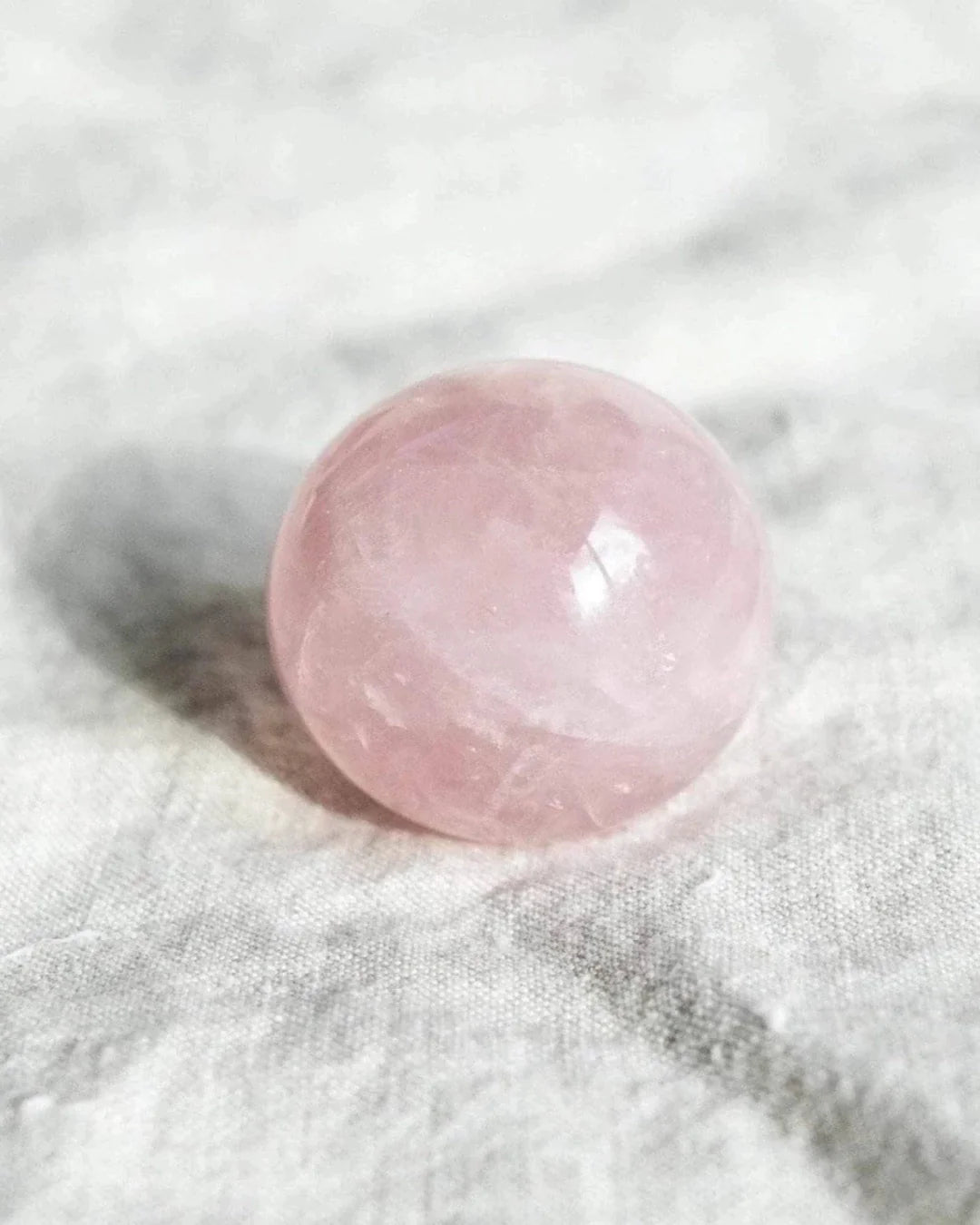
A rose quartz sphere is small and can sit on a coffee table. If you want a grounding stone near the door, our black obsidian polished stone suits that spot. For a prosperity stone in the wealth corner, try green aventurine tumbled stones.
Our rough fluorite cluster is described as calming for a busy mind, which makes it a natural fit for a reading corner. The rose quartz sphere is described as bringing a loving feel to a shared seating area.
Which Crystals Should Not Be Placed Together
Some stones shouldn't share a shelf. A high-energy stone next to a calming one can leave a spot feeling muddled, according to many practitioners' traditions.
Keep these apart:
- Calming and activating stones: amethyst next to citrine can fight for the same space
- Soft stones and hard points: selenite scratches easily, so keep clear quartz points away
- Too many stones in one spot: three or more in a small tray reads as clutter
A simple rule: one stone per intention per zone. If two stones serve the same purpose, rotate them instead of stacking them.
How to Activate Crystals for the First Time
Activation is the practice of setting a clear intention for a new stone and clearing any old energy from it. A common approach is to cleanse first, then state your intention while holding the stone.
Cleansing matters to many practitioners because stones pass through many hands before they reach you. Liv Rocks smudges its pieces to clear old energies before they are packed.
A Simple First-Time Activation Ritual
Try this on the day your stone arrives:
- Set the stone on a windowsill in moonlight overnight.
- Hold it the next morning and take three slow breaths.
- Say your intention out loud, in one short sentence.
- Place it in its chosen spot and leave it there for a week.
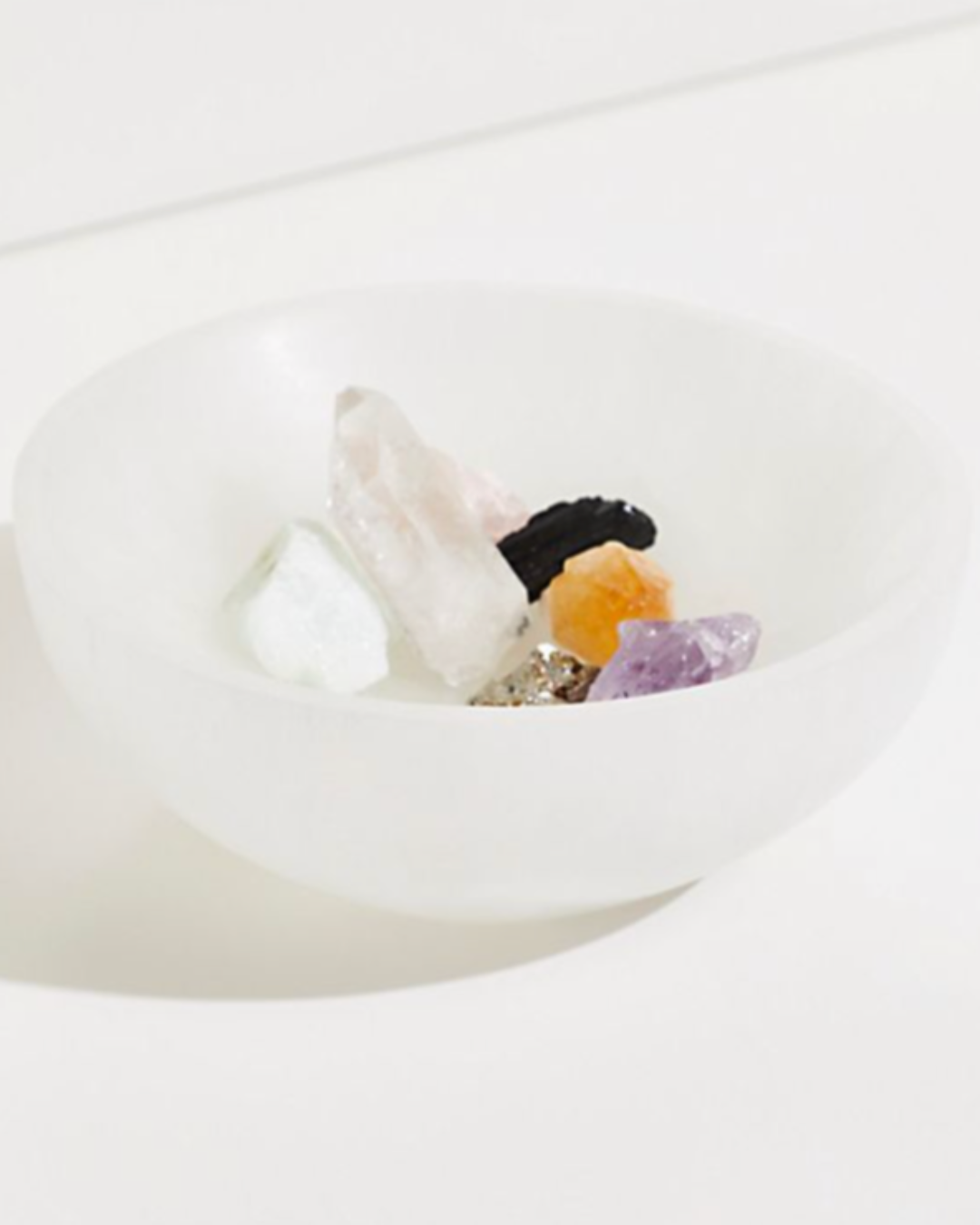
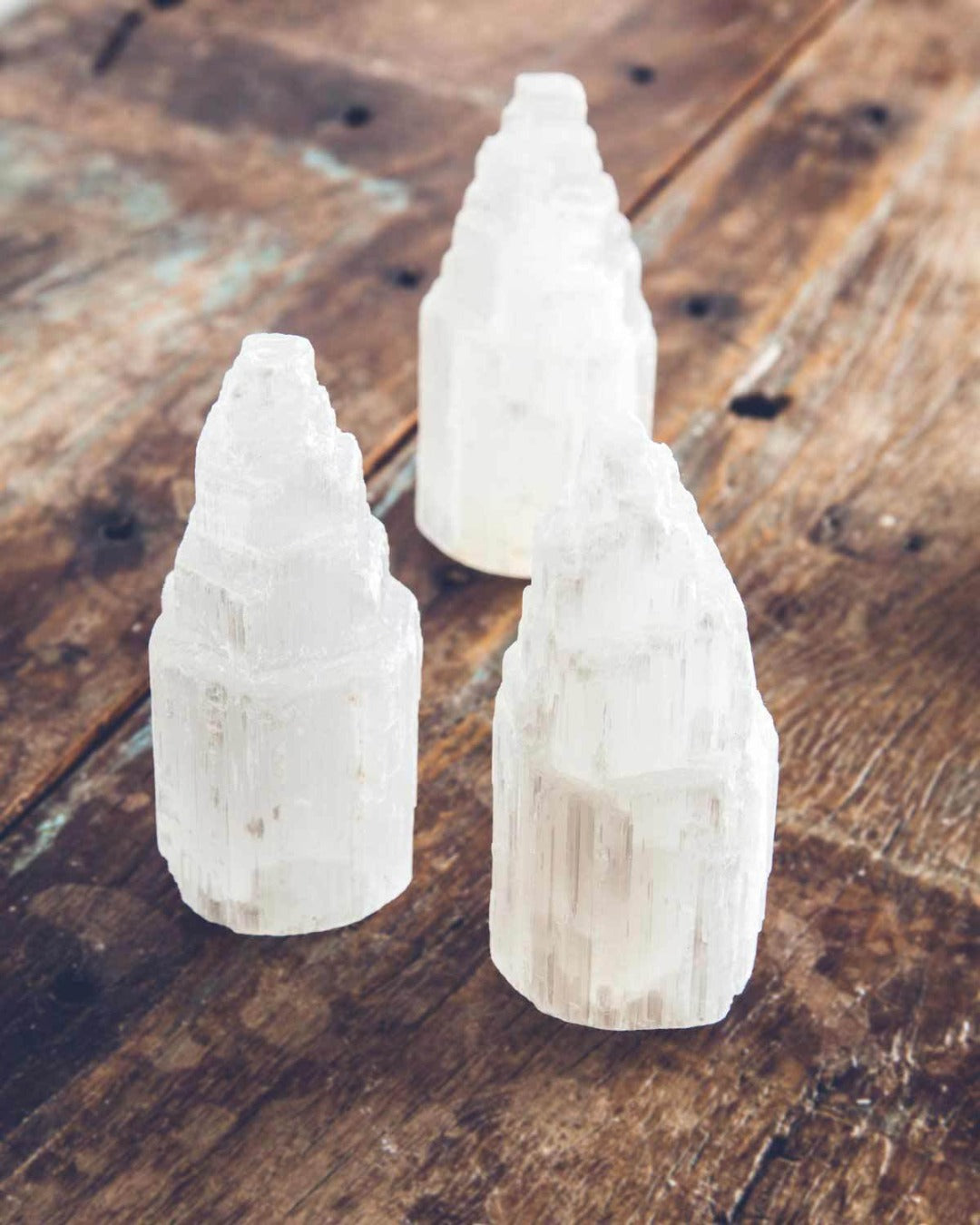
A selenite tower makes a simple cleansing tool to keep nearby. You can also rest smaller stones in a selenite charging bowl between uses. Our selenite charging bowl with crystals includes seven loose crystals.
Where Crystals Belong on Shelves, Tables, and Windowsills
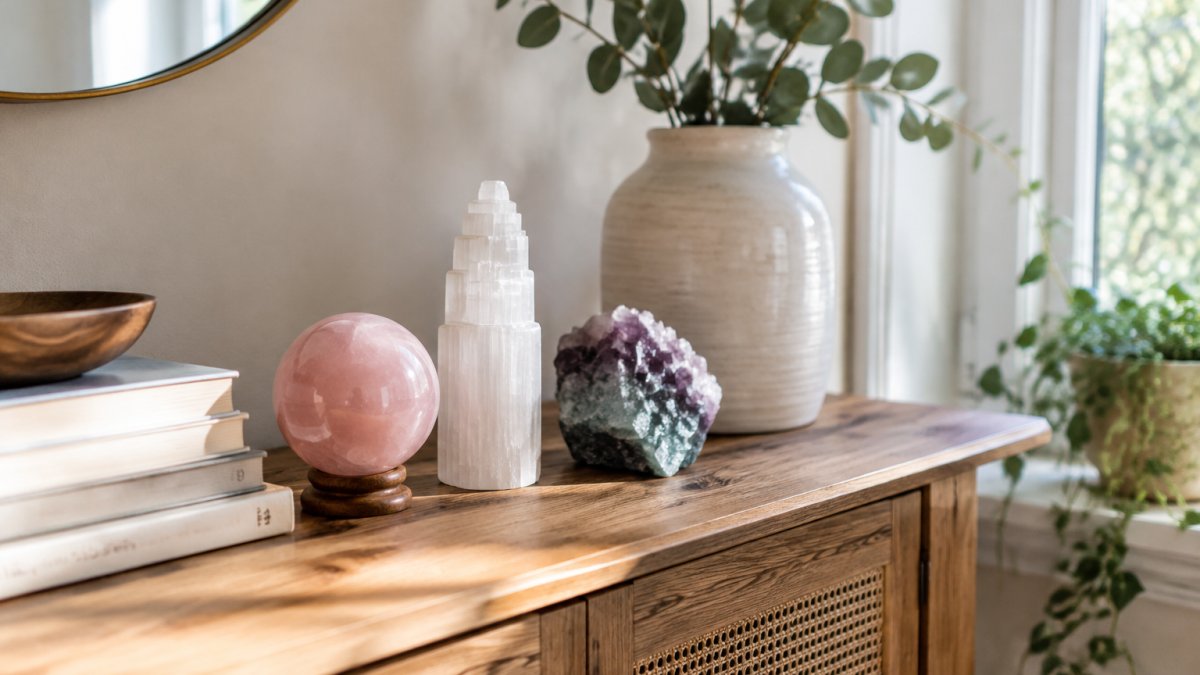
Place crystals at eye level or just below it. That keeps them visible and part of daily use, rather than hidden away.
- Shelves: one stone per shelf, offset from the edge
- Console table: a small cluster near the center, away from keys and mail
- Coffee table: one smooth stone on a tray
Direct sunlight can fade some colors over time, and amethyst and rose quartz are commonly cited as examples. Rotate them out of strong sun every few weeks.
Small-Space and Renter-Friendly Arrangements
No shelves? No problem. Small spaces and rentals call for arrangements that don't need nails or wall damage.
- Use a tray on a side table as a mini display
- Group three small stones on a bookstack
- Set a selenite tower on a windowsill for constant clearing
Keeping Crystals Safe and Cared For Around Kids, Pets, and Sunlight
Safety comes before style. Small tumbled stones look like candy to a toddler, and pets will test anything on a low shelf.
- Keep small stones out of reach of young children
- Skip loose stones on the floor entirely
- Secure heavy specimens on a stable, flat surface
Selenite is sensitive to moisture, so keep it away from water and humidifiers.
For sunlight, rotate sun-sensitive stones every few weeks. Moonlight is a gentler option for charging, according to many traditional practices.
Build Your Living Room Crystal Set With Liv Rocks
Start with one zone and one intention. Add a stone, live with it for a week, then adjust. That slow approach beats buying a dozen stones at once and feeling nothing.
Each crystal is hand-selected for beauty and quality, smudged to clear old energies, and packed with care. Follow our guide to building a manifestation crystal starter kit and build a room that supports the life you want.
The living room should feel like yours, not like a showroom. Pick stones that match how you actually use the space, keep them safe and clean, and let the room do the rest.
Frequently Asked Questions
Where is the best place to put crystals in your living room?
Start with the spot tied to your intention. For calm, place amethyst or fluorite on a side table near seating. For protection, set black tourmaline or a selenite tower by the front door. For connection, put rose quartz on a coffee table or console where people gather. Keep stones out of direct sunlight and away from steamy or damp areas so they stay in good condition.
Which crystals should not be placed together?
Pair stones by purpose rather than mixing every type in one spot. High-energy stones like citrine and pyrite work well together for abundance, while calming stones like amethyst and fluorite suit a relaxation corner. Keep soft stones such as selenite away from water and separate from harder quartz points that can scratch them. Grouping by intention keeps a display coherent and protects fragile pieces.
How do you activate crystals for the first time?
Cleanse the stone first, then set your intention. Hold it in your hands, breathe slowly, and state clearly what you want it to support in the living room, such as calm during family evenings. Place it in its chosen spot and revisit that intention for a few days.
Can crystals be placed near a window or in direct sunlight?
Direct sun can fade some stones over time, and selenite is sensitive to moisture, so keep it dry. If you want a window display, rotate stones or use a sheer curtain to soften the light and protect color.
