

How to Pair Amethyst With Clear Quartz: 7 Simple Steps
Table of Contents
- Why Amethyst and Clear Quartz Are a Popular Pairing
- Clear Quartz and Amethyst Together: What the Pairing Traditionally Means
- How to Pair Amethyst With Clear Quartz in a Bracelet
- Using Amethyst and Clear Quartz Together for Meditation
- Where to Place Amethyst and Clear Quartz at Home
- How to Cleanse Amethyst and Clear Quartz Together
- Choosing Genuine Stones and Setting Realistic Expectations
- Start Your Own Amethyst and Clear Quartz Pairing Today
- Frequently Asked Questions
Last Updated: November 20, 2026
Why Amethyst and Clear Quartz Are a Popular Pairing
Learning how to pair amethyst with clear quartz is a good starting point, since these two are among the most widely used stones in crystal jewelry and home altars. Many people pair them because the stones look good together. The purple of amethyst sits beautifully beside the clear, glassy shine of quartz.
Most of the appeal comes from simple contrast. Amethyst is a violet variety of quartz, which means the two stones share a similar base (Natural Gemstones). That makes them easy to match in a bracelet, a grid or a bowl on a shelf. They also tend to appeal to the same kind of buyer: someone looking for calm, clarity and a sense of focus.
Here is what most shoppers want from the pairing:
- A calming stone that feels soft and easy to wear
- A clear stone that brightens the mix
- A set that looks balanced, not busy
- Two stones that are simple to find and easy to care for
Clear Quartz and Amethyst Together: What the Pairing Traditionally Means
In crystal traditions, these two stones are usually paired for shared purpose. Amethyst is often linked with calm, intuition and protection. Clear quartz is often linked with clarity, focus and amplification. Put together, they are often used as a symbol of a quiet, clear mind.
Clear quartz is also widely described as an amplifier in crystal traditions, which is one reason it appears in many pairings. Amethyst, by contrast, is the stone people reach for when they want to slow down.
It helps to be clear about what this is. For guidance on where to position stones like these in a living space, see intentional spots for crystals at home. These meanings are symbolic and come from folk and spiritual traditions. They are not scientific claims. Nothing here means a stone will treat a health problem. Use the pairing as a personal practice, a reminder or a visual choice.
How to Pair Amethyst With Clear Quartz in a Bracelet
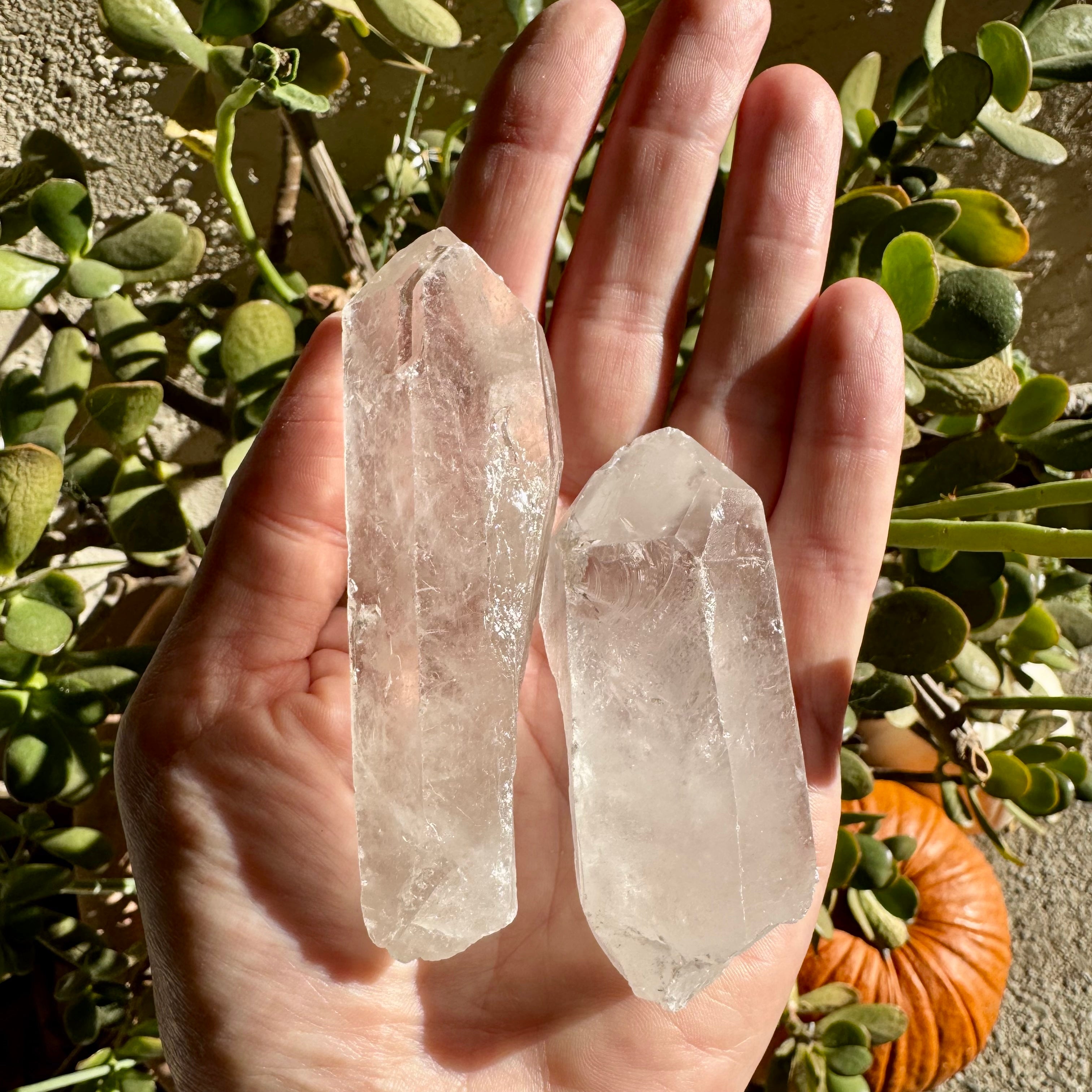
A bracelet is the easiest way to wear these stones together. Start with one amethyst point or a tumbled amethyst stone you like, then add clear quartz beads as spacers. You can use our Amethyst Point if you want a single statement stone, or try a Large Clear Quartz Points for a clear accent.
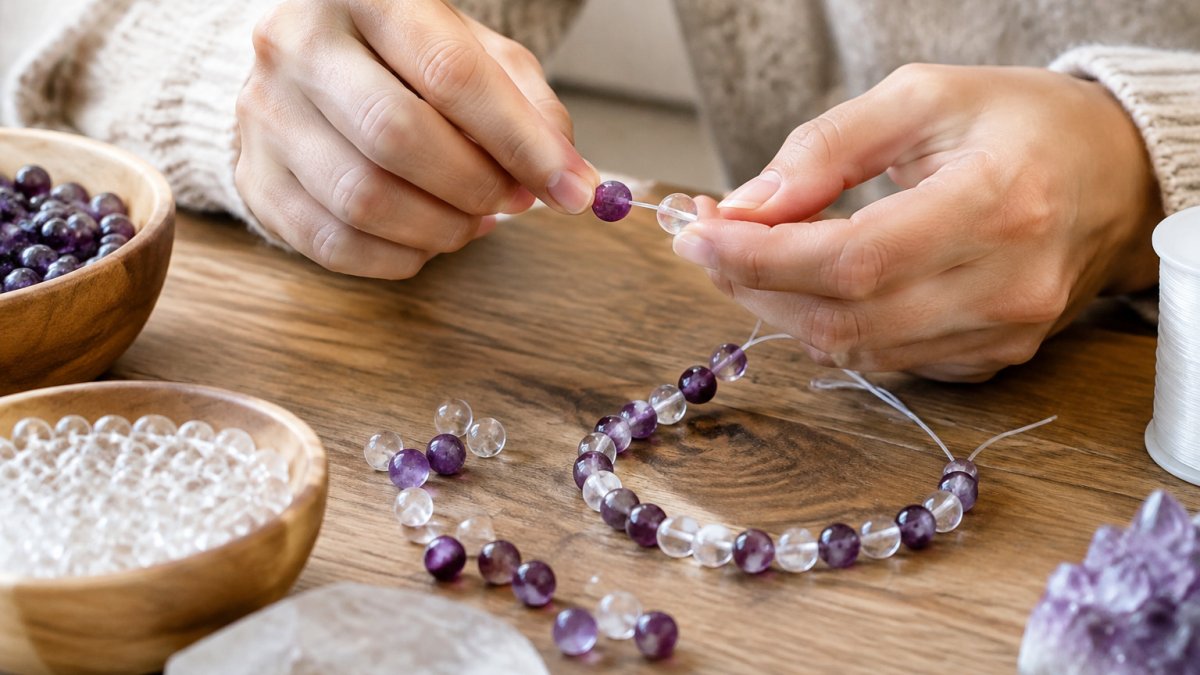
Set your pieces out on a table first. Look at the colors and sizes before you string anything. This simple step saves time and stops you from having to unthread the bracelet later.
Choosing Bead Sizes and Ratios
Choose bead sizes that feel comfortable on your wrist. Mixing sizes adds interest, but keep the ratio simple.
A good starting ratio is two clear quartz beads for every one amethyst bead. That keeps the purple as the accent, not the focus. Plenty of people prefer equal amounts, which looks bolder. Either way works.
Stringing Order and Placement
Start with a center bead, usually an amethyst piece. Work outward in both directions, alternating clear quartz and amethyst. Leave a small space at the clasp so the bracelet sits flat.
Test the fit before you tie the knot. Wrap the strand around your wrist and check it sits snugly without pulling. If the stones bunch together, remove a bead or two. A common mistake is stringing too tightly, which makes the bracelet feel stiff.
Here is a quick summary of the bracelet steps and bead ratios covered above.
| Step | What to do | Note |
|---|---|---|
| Lay out pieces | Arrange colors and sizes on a table | Saves unthreading later |
| Bead ratio | Two clear quartz beads per amethyst bead | Keeps purple as the accent |
| Starting point | Place an amethyst bead at the center | Work outward both ways |
| Spacing | Leave a small gap at the clasp | Lets the bracelet sit flat |
| Fit test | Wrap around wrist before tying | Should be snug, not pulling |
| Common mistake | Stringing too tightly | Makes the bracelet feel stiff |
Using Amethyst and Clear Quartz Together for Meditation
Meditation is one of the most common ways people put this pairing to use, and it is also where a little structure helps. The goal is not to perform a ritual correctly; it is to create a repeatable cue that helps you settle into a short, quiet session.
A Simple Five-Step Setup
- Choose your stones. Pick one amethyst piece and one clear quartz piece that feel comfortable in your hand. Larger clusters work for a tabletop arrangement but are awkward to hold.
- Set the space. Sit somewhere you will not be interrupted for five to ten minutes. A chair with your feet flat on the floor or a cushion on the floor both work. Place the amethyst on your left and the clear quartz on your right, or the reverse, the side does not matter as much as keeping it the same each time.
- Set an intention. Before you begin, name one thing you want from the session in a single sentence. Common intentions include "slow down," "focus on one task," or "notice what I am feeling." Write it down if you like. The intention is a personal reminder, not a command to the stone.
- Hold and breathe. Rest your hands on your knees or in your lap, palms up, with one stone in each hand if that is comfortable. Close your eyes or soften your gaze. Take slow breaths and notice the weight and temperature of each stone. When your attention drifts, return it to the stone in your hand.
- Close the session. After five to ten minutes, set the stones down and take one more slow breath. Note in a sentence or two how the session felt.
Matching the Stones to the Intention
A common pattern is to let the intention guide which stone you hold first. If your goal is to quiet a busy mind, start with the amethyst and move to the clear quartz when you feel settled. If your goal is to stay alert and focused, start with the clear quartz and finish with the amethyst. There is no fixed rule, and many people simply hold both for the full session.
What This Practice Is and Is Not
These meanings come from folk and spiritual traditions, and the pairing is used as a symbolic and sensory cue. It is not a medical treatment, and no stone has been shown to treat anxiety, sleep problems, or any other health condition. If you are using meditation to support your mental health, treat the stones as part of a routine you enjoy, not as a substitute for care from a qualified professional.
Keep your grip loose during longer sessions, and put the stones down if your hand starts to feel tense.
Where to Place Amethyst and Clear Quartz at Home
Placement is mostly about how a space feels to you and how you use it day to day. The pairing works in several common spots, and each has practical trade-offs worth knowing before you set stones down.
Bedside Table
A bedside table is a natural home for amethyst, since many people like to keep it nearby at night. Place the amethyst on the side where you set your phone or a glass of water, and put a small clear quartz point beside it. A small tray keeps the pair together and protects the surface underneath.
Desk or Workspace
For a desk, the clear quartz is often the anchor and the amethyst the accent. Put the clear quartz near your monitor or laptop and the amethyst slightly to one side, where you will see it when you pause. This arrangement is a visual cue to take a breath between tasks. Keep stones away from the edge of the desk and away from drinks.
Windowsill and Shelf
Clear quartz looks bright on a windowsill, where light can catch it. Amethyst can go on the same sill, but keep in mind that long periods of strong direct sunlight can fade some colored stones over time. A shelf in a living room or hallway works well for a shared display: group the two stones on a tray with a small gap between them so each is visible.
A Simple Display Arrangement
A common pattern is a three-part arrangement: a larger clear quartz point at the back, a tumbled amethyst in front of it, and a smaller clear quartz piece to one side. This gives the display a clear focal point without looking busy. Keep the arrangement where you will see it each day, because a visible reminder is often the most useful part of the practice.
Practical Trade-Offs
- Light: windowsills show off clear quartz but can fade amethyst over months of direct sun.
- Dust: open shelves collect dust, so plan to wipe stones and trays weekly.
- Humidity: bathrooms and kitchens are poor spots for most stones because moisture and cleaning sprays can dull or damage them.
- Breakage: clusters and points chip if they fall, so keep them back from edges and away from high-traffic paths.
How to Cleanse Amethyst and Clear Quartz Together
Cleansing is a personal choice, and many people like to do it on a regular schedule. A simple method is to rinse the stones under cool running water, then let them air dry on a towel. Use a soft cloth to remove any dust.
Avoid harsh cleaners, and do not soak stones that may be sensitive to water. Keep them out of strong sunlight for long periods, since some colors can fade. Store amethyst and clear quartz separately in a soft pouch so they do not scratch each other.
Choosing Genuine Stones and Setting Realistic Expectations
Shoppers often ask how to tell real stones from imitations. Look for natural irregularities, such as small flaws, uneven color and slight differences between pieces. Perfectly uniform stones can be a sign of glass or dyed material.
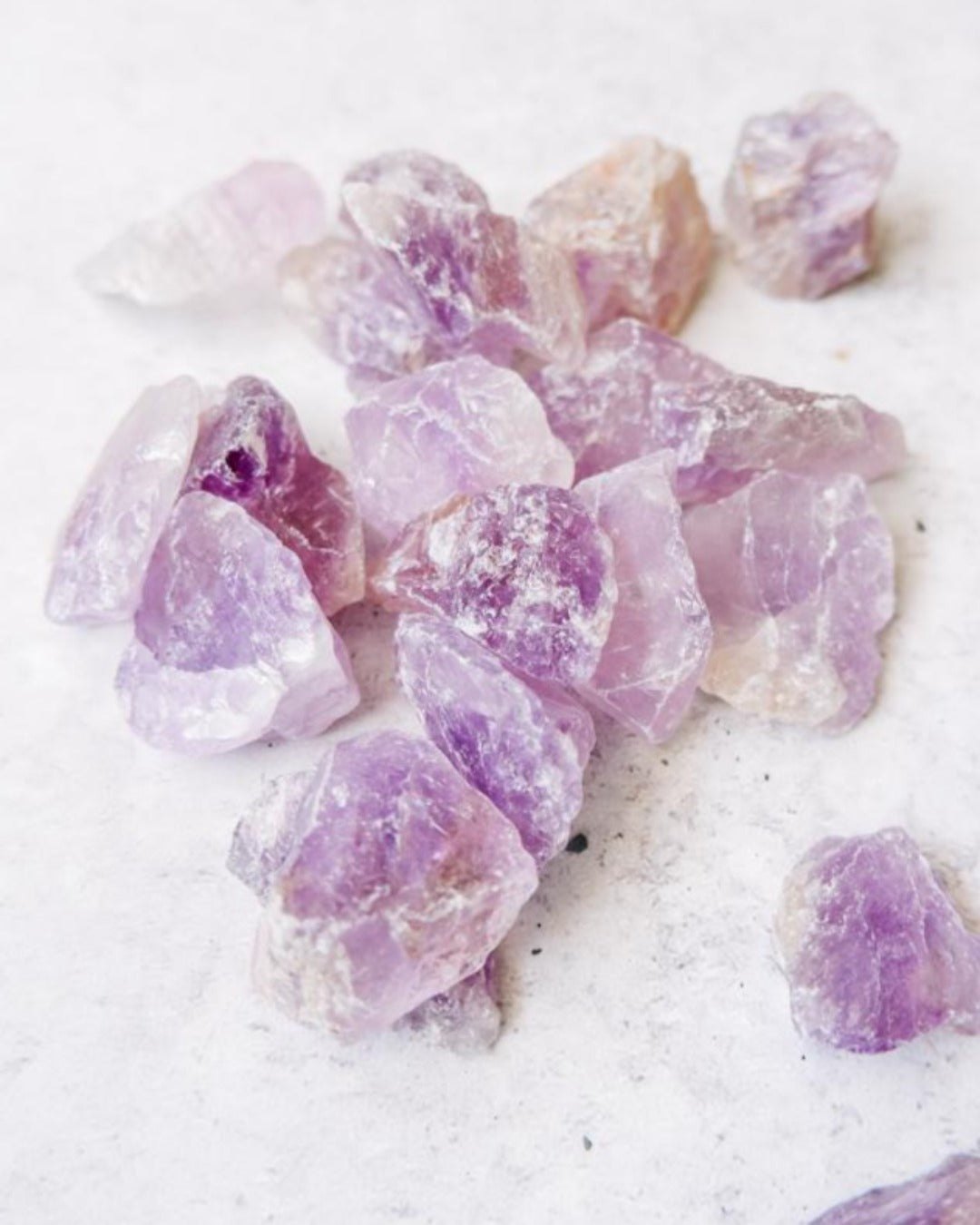
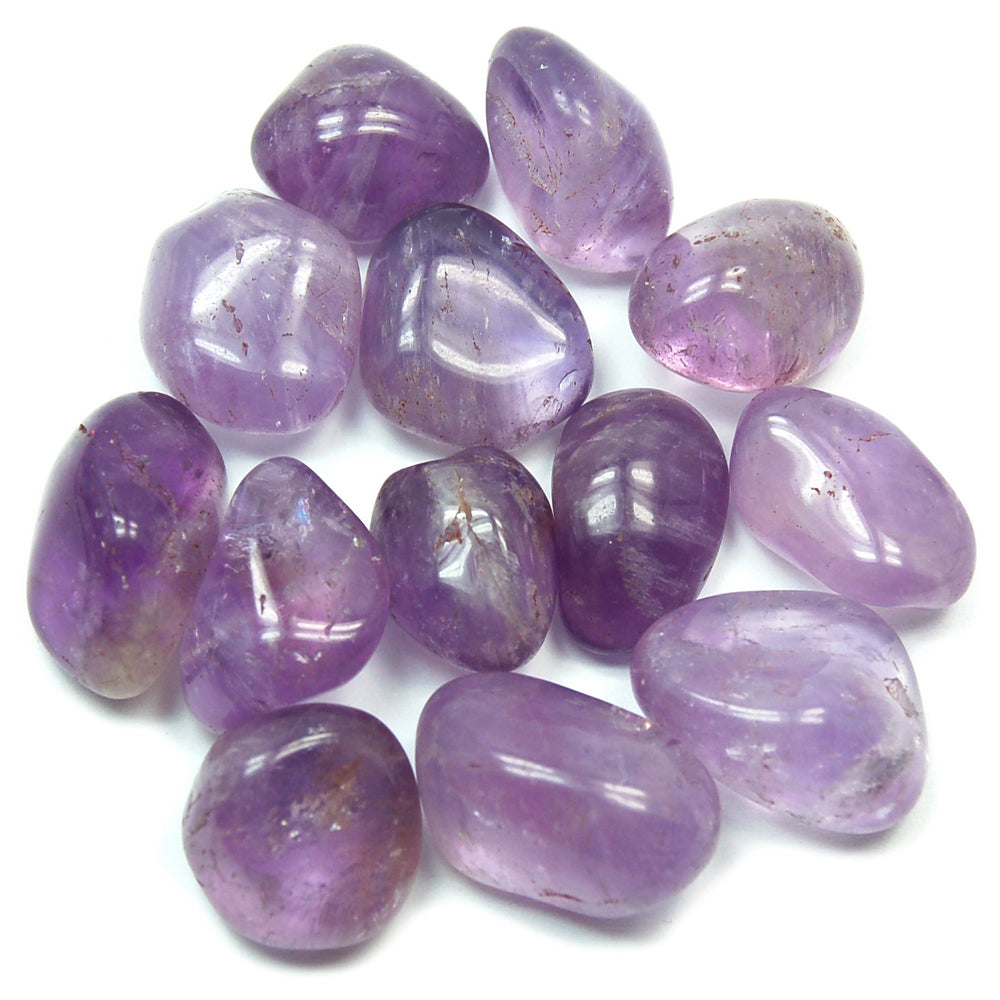
Buy from a seller that describes its stones clearly. Check the size, the origin if it is stated, and the photos. Our Tumbled Amethyst and Rough Amethyst Crystals listings show each stone's size and details.
It helps to keep expectations realistic. Crystals are a meaningful part of many people's routines, but they are not a replacement for medical or mental health care. If you are struggling with anxiety, sleep or any other health concern, talk with a qualified professional.
Start Your Own Amethyst and Clear Quartz Pairing Today
Pairing amethyst with clear quartz is simple. Pick a bracelet, a meditation spot or a shelf in your home, then let the stones fit into your routine. Start small, pay attention to how the practice feels, and adjust as you go.
Browse the Liv Rocks collection to find your first pieces, from Tumbled Amethyst to larger Large Clear Quartz Points.
Frequently Asked Questions
Can you use amethyst and clear quartz together?
Yes. Amethyst and clear quartz are commonly paired in jewelry, meditation sets and home displays, and there is no physical safety concern in mixing them. Clear quartz is traditionally used as an amplifier, so many people place it alongside amethyst to pair the calm, intuitive associations of amethyst with the clarity and focus associated with clear quartz. Liv Rocks offers Rough Amethyst Crystals, Tumbled Amethyst and Clear Quartz Crystal Points.
What does clear quartz and amethyst together mean?
Traditionally, amethyst is associated with calm, intuition and protection, while clear quartz is associated with clarity, perspective and amplifying other stones. Together, the pairing is often used as a symbol of balance between a soothing stone and a clarifying one. These meanings come from long-standing spiritual and symbolic practice rather than from scientific evidence, so treat them as a personal framework for intention rather than a guaranteed outcome.
Where should you place amethyst and clear quartz together?
Many people place the pair on a nightstand, in a meditation corner or on a desk where they will see them daily. A small clear quartz point beside a tumbled amethyst stone works well as a visual reminder of an intention. Keep stones out of direct, prolonged sunlight, since amethyst can fade over time, and avoid placing them where they could be knocked off a shelf or cause a trip hazard.
How do you cleanse amethyst and clear quartz?
Rinse both stones under cool running water, then let them air dry. Amethyst is a relatively soft stone, so avoid prolonged soaking and harsh cleaning agents. Clean them regularly, especially after intense sessions or after they have been handled by others.
